
Anthropic’s Claude Fable 5: The Shift From AI Answers to AI Execution
Anthropic’s Claude Fable 5: The Shift From AI Answers to AI Execution
Anthropic has launched Claude Fable 5, and the release matters for a reason bigger than another model name on the AI leaderboard.
For the last few years, most people have used AI as a smart assistant. Ask a question, get an answer. Paste a document, get a summary. Describe a bug, get a fix. Need a draft, get a first version. That has been useful, and in many cases genuinely impressive, but it still keeps AI close to the surface of work. Claude Fable 5 points to something deeper.
Anthropic says Fable 5 is its most capable generally available model so far, with stronger performance in software engineering, knowledge work, vision, scientific research, and long-running tasks. The most important phrase there is “long-running tasks.” That is where the story starts to change. AI is no longer moving only toward better answers. It is moving toward longer execution. Here are the specs:
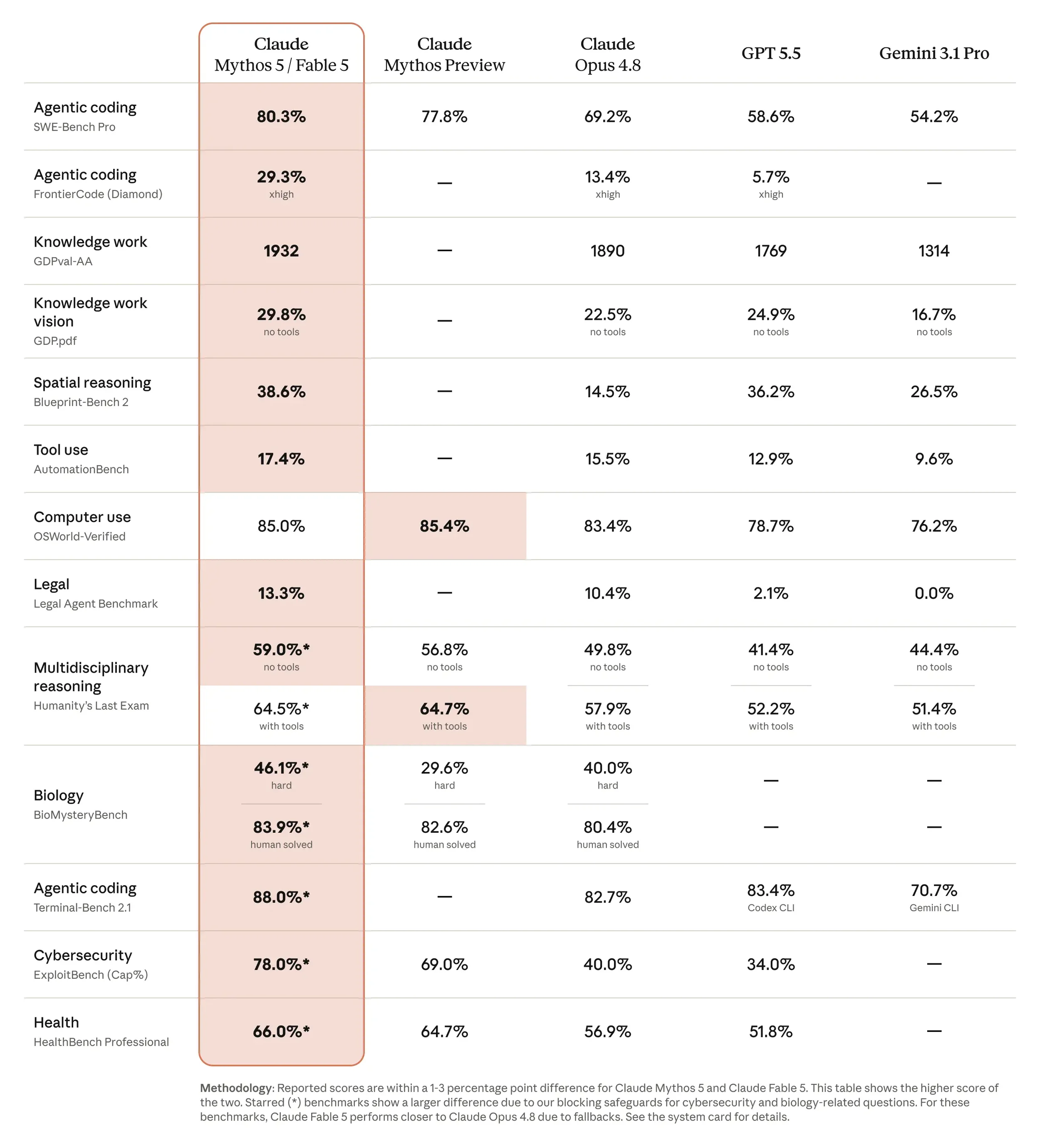
Real work is messy. It has context, tradeoffs, files, decisions, review, errors, and follow up. A model that can stay with a task longer, reason across more context, and help move work forward is more valuable than a model that simply gives a clever response.
For engineering teams, this is especially important.
The first wave of AI coding tools helped developers write snippets, explain errors, create tests, and move faster through routine work.
The next wave is broader, Models like Fable 5 suggest a future where AI can help understand larger codebases, plan technical changes, support migrations, review output, and assist with work that takes more than a few prompts.
That does not make engineers less important. It makes engineering judgment more important.
If AI can write more code, humans need to become better at deciding what should be built, how systems should be designed, where risk lives, and whether the final output is actually right. The value moves upward from typing and fixing into architecture, product thinking, security, quality, and business context.
The same pattern applies beyond engineering. In finance, legal, operations, research, and customer support, the biggest opportunity is not just faster drafting or summarization. It is workflow redesign. Companies will start asking which parts of work can be handled by AI, which parts need human approval, and where AI can reduce delays, handoffs, and repetitive effort. That is the real business conversation.
Claude Fable 5 also comes with an important safety signal. Anthropic is making the model broadly available with safeguards, especially around high-risk areas like cybersecurity. That tells us frontier AI is entering a more serious phase.
For enterprises, this matters a lot. A powerful model is not automatically ready for production use. Companies still need to think about data privacy, access control, compliance, cost, human review, and accountability. The stronger AI becomes, the more important governance becomes.
The bigger signal from Fable 5 is that the AI market is moving from assistants to execution systems. The first phase of AI helped people create faster. The next phase will help teams complete more work with fewer manual steps.
That does not mean AI will run everything on its own. It means the relationship between people and software is changing. Humans will still set direction, make judgment calls, handle ambiguity, and own consequences. AI will increasingly take on more of the repetitive, complex, and time-consuming execution beneath that layer.
The companies that benefit most will not be the ones that simply buy the newest model. They will be the ones that understand where AI belongs in the workflow, how to supervise it, and how to build trust around it.
Claude Fable 5 matters because it shows where this is heading. From AI that answers. To AI that helps complete the work.